
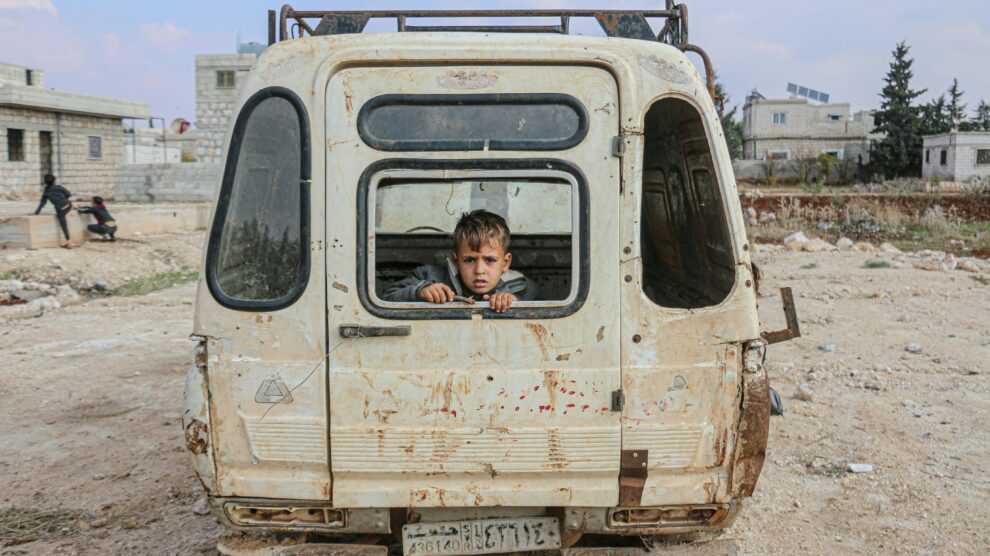
A record number of people have been forced from their homes—equivalent to the entire population of Japan. Yet the world’s response remains dangerously fragmented.
We are living through the largest displacement crisis in recorded human history, yet it barely registers in our collective consciousness. In 2024, the number of forcibly displaced people exceeded 120 million—a figure so staggering it defies comprehension. To put this in perspective: if displaced people formed their own nation, it would be the 12th most populous country on Earth, larger than Japan, larger than Mexico, larger than all of Germany.
This isn’t just a number. Behind each digit are individuals who have lost everything: homes reduced to rubble, communities torn apart, children growing up in refugee camps who have never known stability, families separated across continents with no prospect of reunion. Yet unlike crises that dominate headlines and mobilize international action, this catastrophe unfolds in a deafening silence, fragmented across dozens of conflicts that rarely capture sustained global attention.
The inaugural Global Peace Alliance (GPA) Peace Index reveals the uncomfortable truth behind this emergency: the displacement crisis isn’t just growing—it’s accelerating, driven by conflicts the international community seems increasingly unable or unwilling to resolve. And as climate change emerges as a parallel driver of mass movement, the humanitarian infrastructure designed for temporary Cold War-era crises is collapsing under the weight of permanent, mass displacement.
The New Geography of Displacement
Four conflicts are primarily responsible for pushing displacement to this unprecedented level: Sudan, Gaza, Ukraine, and Myanmar. Together, they account for nearly 30 million of the newly displaced since 2022.
Sudan’s invisible catastrophe represents the fastest-growing displacement crisis on the planet. Since civil war erupted in April 2023 between competing military factions, over eight million people—more than 15 percent of Sudan’s entire population—have been forced from their homes in just 18 months. The violence is staggering in both scale and brutality: systematic ethnic cleansing in Darfur, with the Rapid Support Forces and allied militias massacring thousands from the Masalit people, burning villages, and deploying sexual violence as a weapon of war. Yet Sudan receives a fraction of the media attention and humanitarian funding directed toward other crises. The UN reports receiving only 27 percent of required funding for the Sudan response—a damning indictment of global priorities.
Gaza’s humanitarian emergency has displaced 90 percent of the territory’s population—approximately 1.9 million people—since October 2023. Entire neighborhoods have been reduced to rubble, critical infrastructure systematically destroyed, and the civilian population trapped in an ever-shrinking area with inadequate food, water, and medical care. The density of displacement in Gaza is unlike anywhere else: families move from one temporary shelter to another within the same besieged territory, with nowhere truly safe to go.
Ukraine’s exodus has generated Europe’s largest displacement crisis since World War II: 6.1 million refugees scattered across Europe, plus 3.7 million internally displaced within Ukraine’s borders. Nearly 30 percent of Ukraine’s pre-war population has been uprooted—a demographic catastrophe with profound implications for the country’s future, as young people flee abroad while elderly populations remain in conflict zones.
Myanmar’s civil war following the 2021 military coup has displaced over three million people, including the Rohingya refugees who fled earlier waves of ethnic cleansing. The junta’s brutal crackdown on democratic resistance, combined with intensifying conflicts with ethnic armed organizations, has created a humanitarian emergency that receives minimal international attention, largely because Myanmar’s geographic remoteness and closed political system make sustained media coverage difficult.
Climate Change: The Accelerant
But conflicts alone don’t tell the whole story. The GPA Peace Index documents how climate change is no longer a future threat—it’s actively driving displacement today, operating as both a direct cause and a conflict accelerant.
The numbers are alarming. Pakistan’s catastrophic 2022 floods displaced 33 million people temporarily, with eight million still unable to return home. The Horn of Africa’s multi-year drought has driven over two million people from their land, intensifying intercommunal violence over shrinking resources. In the Sahel region, desertification is pushing pastoralists southward into farmer territory, framing what appear to be ethnic conflicts but are fundamentally resource competitions driven by environmental collapse.
Water scarcity is emerging as a particularly dangerous flashpoint. The GPA Index identifies multiple water-related tensions approaching crisis: Ethiopia’s Grand Ethiopian Renaissance Dam on the Nile, which Egypt views as an existential threat to its water security; Turkey’s dam projects reducing water flows to Syria and Iraq by 40 percent, contributing to agricultural collapse and refugee flows; India’s hydroelectric projects in Kashmir threatening Pakistan’s food security through the contested Indus Waters Treaty.
The research reveals a troubling correlation: countries with high climate vulnerability are 3.5 times more likely to experience armed conflict. For every one-degree Celsius increase in temperature, interpersonal violence rises four percent and intergroup conflict rises 14 percent. Yet traditional conflict early-warning systems dramatically underweight climate indicators, meaning international responses consistently arrive too late.
By 2030, an estimated 143 million people will be displaced by climate change, according to World Bank projections. Without integrating climate adaptation into conflict prevention frameworks, humanitarian interventions will perpetually respond to symptoms while root causes intensify exponentially.
The Strain on Host Countries and the Humanitarian System
The displacement crisis creates a catastrophic inequity: 75 percent of refugees are hosted by low- and middle-income countries, while the wealthiest nations host just 25 percent. Countries least equipped to absorb massive refugee populations bear the greatest burden.
Lebanon hosts one refugee for every six citizens—an impossible ratio that has contributed to the country’s economic meltdown. Jordan, despite its own economic challenges, hosts over three million refugees from Syria, Palestine, and Iraq. Turkey shelters 3.6 million refugees, primarily Syrian. Chad, among the world’s poorest nations, now hosts 1.2 million refugees—six percent of its population—fleeing violence in Sudan and the Central African Republic.
The UNHCR faces a $3.2 billion funding gap, receiving only $8.5 billion of the $11.7 billion requested for 2024. Consequences are immediate and severe: the World Food Programme has cut food rations in 24 of 37 operations due to funding shortfalls, leaving families hungry. Fifty percent of refugee children are out of school, compared to nine percent globally—creating a lost generation with limited education and dimmed prospects.
The humanitarian system was designed for temporary emergencies, not permanent mass displacement. Yet the average time someone spends displaced has increased from nine years in the 1990s to 26 years today. Eighty-three percent of refugees—31.3 million people—are trapped in situations lasting five years or longer. Multi-generational displacement has become the norm: Palestinian refugees number 5.9 million under UNRWA’s mandate, many born in exile; Afghan refugees total 5.7 million, with entire families who have never seen their homeland.
Why the Silence? Why the Paralysis?
If 120 million forcibly displaced people constitute a crisis of historic proportions, why isn’t it treated as such? The GPA Peace Index identifies several uncomfortable explanations.
Donor fatigue is real and accelerating. After Ukraine, Gaza, and multiple other emergencies, wealthy nations face competing demands and skeptical domestic constituencies questioning endless humanitarian expenditures. When crises multiply, each receives progressively less attention and fewer resources.
Geographic and political proximity matters profoundly for international response. Ukraine received immediate, massive support from Western nations due to geographic proximity, shared democratic values, and clear great-power implications. Sudan, generating comparable displacement, receives minimal attention because it involves no direct Western interests, presents no clear “good guys versus bad guys” narrative comfortable for Western audiences, and occurs in a region largely absent from major media markets.
Media attention patterns amplify this disparity. Television networks require compelling visuals, clear narratives, and accessible logistics. Conflicts in remote areas with restricted journalist access (Myanmar, Sudan, Somalia) generate far less coverage than conflicts with extensive international media infrastructure. The result: some humanitarian catastrophes unfold in near-complete obscurity, with displaced populations doubly victimized—first by violence, then by international indifference.
Institutional architecture failure compounds these problems. The UN Security Council’s veto system paralyzes action on conflicts involving major power interests (Ukraine, Gaza, Sudan where Russia blocks criticism of Wagner operations). Regional organizations chronically lack resources and political will to intervene effectively. Bilateral diplomacy remains fragmented and episodic rather than systematic. International humanitarian law is violated with impunity because enforcement mechanisms are non-existent or dependent on the goodwill of powerful states.
Prevention catastrophically underfunded represents perhaps the most damning failure. The international community allocates 99 percent of resources to crisis response and only one percent to conflict prevention—despite overwhelming evidence that early diplomatic engagement costs a fraction of post-conflict humanitarian operations. Global military expenditure reached $2.4 trillion in 2024, yet conflict prevention receives less than one percent of this massive investment. The GPA Index documents this perverse priority system: we spend vastly more preparing for war than preventing it.
What the Data Reveals
The GPA Peace Index provides the most comprehensive picture yet of global displacement patterns, and the findings demand attention:
Sixteen countries now have more than five percent of their total population forcibly displaced—a threshold indicating severe state fragility and humanitarian emergency. Syria leads with an almost incomprehensible 60 percent of its pre-war population displaced (13.7 million people from a 2011 population of 23 million). South Sudan, Afghanistan, Somalia, and Myanmar all exceed 20 percent of their populations displaced.
The Middle East and North Africa region accounts for 41 million displaced persons—34 percent of the global total—from just 11 percent of the world’s population. Sub-Saharan Africa hosts 38 million displaced people, with 18 active state-based conflicts generating continuous new displacement. Protracted displacement situations define both regions: Somali refugees have been displaced for three decades, Sudanese Darfuris for two decades, Syrians for over thirteen years.
Forced displacement is becoming hereditary. Children born in refugee camps who grow up, form families, and raise their own children in the same camps represent a failure of international responsibility almost beyond comprehension. UNRWA schools in Palestinian refugee camps teach third and fourth-generation refugee children. Afghan refugee camps in Pakistan house families who fled in the 1980s and have never returned.
Perhaps most troubling: only one percent of refugees achieve permanent resettlement to third countries annually. Voluntary repatriation is often unsafe, local integration remains dramatically underfunded, and restrictive immigration policies in wealthy nations block pathways for the 99 percent left waiting, often for decades, in camps or urban poverty.
A Humanitarian System Breaking Under the Weight
The current displacement crisis exposes fundamental flaws in how the international community addresses forced migration. The humanitarian system operates on short-term funding cycles—annual budgets dependent on voluntary contributions—that are catastrophically ill-suited for managing displacement lasting decades.
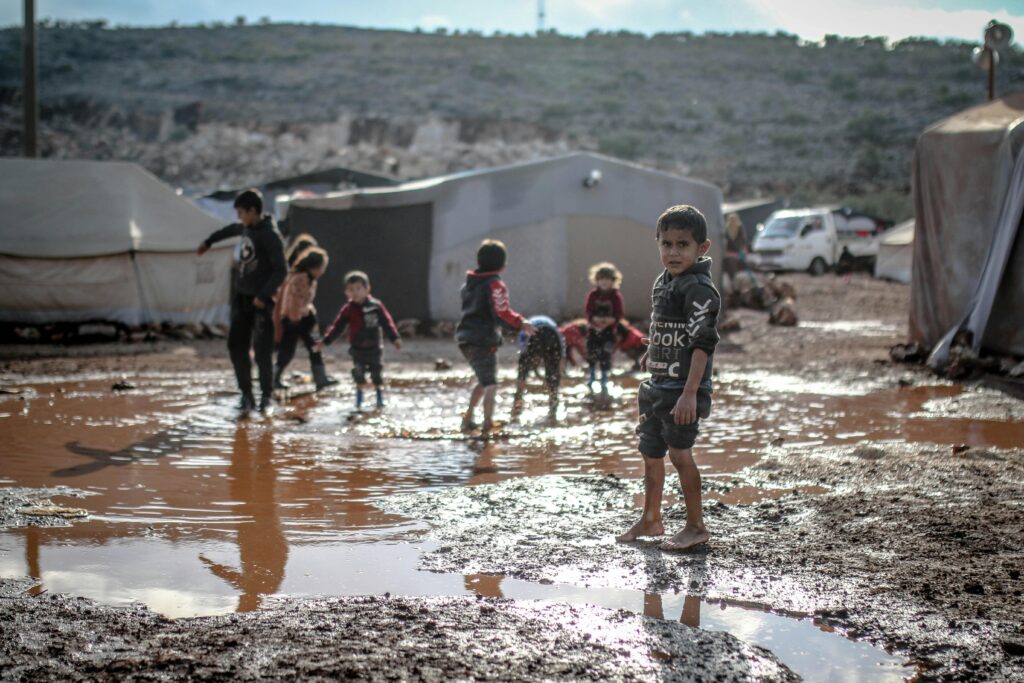
Refugee camps, intended as temporary shelters, have become permanent cities. Dadaab in Kenya, established in 1991, houses over 200,000 Somali refugees. Zaatari in Jordan, opened in 2012 for Syrian refugees, now contains 80,000 people living in prefabricated shelters never designed for permanent habitation. These camps lack adequate schools, employment opportunities, freedom of movement, or pathways to citizenship—condemning inhabitants to lives perpetually suspended between their past homes and any future prospect of normalcy.
Urban refugees face different but equally severe challenges. Most refugees globally now live in cities rather than camps—70 percent according to UNHCR. They compete with host populations for limited jobs in informal economies, often without legal work authorization. They’re vulnerable to exploitation, unable to access public services, and live in constant fear of detention or deportation.
Host countries, particularly in the Global South, grow increasingly resentful of bearing disproportionate burdens while wealthy nations contribute minimal direct hosting. The 2018 Global Compact on Refugees established burden-sharing principles, but implementation remains weak. When Lebanon’s economy collapsed, when Jordan faces water scarcity exacerbated by refugee populations, when Chad struggles to feed refugees while its own citizens face food insecurity—these are consequences of failed international burden-sharing.
The Path Forward: What Needs to Change
Addressing the 120 million displaced requires fundamental reforms to international humanitarian architecture, not incremental adjustments to a failing system. The GPA Peace Index offers specific recommendations:
Burden-sharing must become binding, not voluntary. Wealthy nations must commit to hosting refugees proportional to their economic capacity and population. Current disparities—where Germany hosts 2.6 million refugees while other wealthy nations host token numbers—are morally indefensible and politically unsustainable.
From humanitarian relief to development investment. Short-term aid addressing immediate needs must transition to long-term development benefiting both refugees and host communities. When host community populations see refugees receiving services they lack, tensions become inevitable. Integrated development programs—schools serving refugee and local children, healthcare clinics for all, economic development creating jobs for both populations—reduce tensions while building sustainable futures.
Durable solutions remain virtually non-existent. Only one percent of refugees resettle permanently; voluntary repatriation is often unsafe; and local integration remains dramatically underfunded. New frameworks must include pathways to citizenship, economic integration programs, and realistic acknowledgment that many refugees will never safely return home.
Climate displacement frameworks are desperately needed. Currently, no legal category exists for “climate refugees,” leaving millions without international protection. As climate-driven displacement accelerates, international law must adapt, providing protection for those fleeing environmental catastrophes just as we protect those fleeing persecution.
Conflict prevention must be transformed from marginal diplomatic activity to central foreign policy priority. Early diplomatic engagement, addressing structural conflict drivers (inequality, climate stress, governance failures), and adequately funding peace processes would prevent displacement crises before they begin. Colombia’s peace process demonstrates that sustained commitment, inclusive dialogue, and adequate resources can dramatically reduce violence—preventing the displacement it generates.
Regional cooperation requires strengthening. Most displacement is regional: Syrians flee to neighboring Turkey, Lebanon, and Jordan; Venezuelans to Colombia and Peru; Sudanese to Chad and Egypt. Regional hosting agreements, burden-sharing mechanisms, and coordinated response frameworks are essential. The IGAD organization in East Africa, ECOWAS in West Africa, and OAS in the Americas possess regional knowledge and legitimacy that global institutions lack, but require resources and political support to act effectively.
A Crisis Defining Our Era
The displacement crisis represents one of the defining humanitarian and political emergencies of our time. Yet it unfolds largely unnoticed, fragmented across dozens of conflicts that individually fail to capture sustained international attention, even as the cumulative total reaches historically unprecedented levels.
The 120 million displaced aren’t abstract statistics—they’re teachers who can no longer teach, doctors unable to practice medicine, engineers driving taxis in foreign cities, children who’ve never attended a full year of school, elderly people who will die in exile, families permanently fractured across continents. They represent an immense loss of human potential, economic productivity, and social capital that impoverishes not only displaced populations but the entire human community.
Sudan’s invisible catastrophe, Gaza’s humanitarian emergency, Ukraine’s exodus, Myanmar’s civil war—these conflicts generate displacement the world seems increasingly unable to address effectively. When combined with climate-driven movement that will only intensify, the question becomes not whether displacement will worsen but whether the international community will finally treat it with the urgency it demands.
The GPA Peace Index provides the empirical foundation for understanding this crisis systemically rather than as isolated emergencies. It documents how conflict prevention catastrophically underfunded, humanitarian systems designed for temporary crises managing permanent displacement, and international cooperation fragmenting along geopolitical fault lines combine to produce this catastrophe.
Sustainable solutions exist—burden-sharing agreements, development investment in host communities, conflict prevention, climate adaptation frameworks—but they require political will currently absent. Until the international community recognizes that 120 million forcibly displaced people constitute not merely a humanitarian concern but an existential challenge to global stability, the crisis will continue deepening, with millions more added to populations already living in permanent temporariness.
The data is clear. The path forward is visible. What remains is the political courage to act.
For the complete data, regional analysis, and detailed policy recommendations, read the full Annual GPA Peace Index 2025 at https://shorturl.at/xYhpB